
What you read in this article:
Turkey boasts a rich and storied history of handicrafts, with an artisanal tradition that has been refined over centuries. The country’s handicrafts are celebrated for their beauty, intricacy, and functionality, ranging from magnificent carpets to exquisite jewelry.
These authentic handicrafts of Turkey are available nationwide, offering a tangible connection to the country’s cultural heritage. They serve not only as stunning decorative pieces for any home or office but also as meaningful souvenirs, reminding you of your travels.
For anyone visiting Turkey, these unique handcrafted items are a must-have, showcasing the skill and artistry that define the nation. In this article, we want to introduce you to the best Turkish handicrafts.
The Most Popular Handicrafts of Turkey
Turkey boasts a rich heritage of traditional crafts, with artisans keeping ancient skills alive through generations. These handicrafts are not just souvenirs; they are a deep dive into the country’s history and culture. Here are 10 of Turkey’s most popular and iconic handicrafts:
Hand-Painted Ceramics and Iznik Tiles
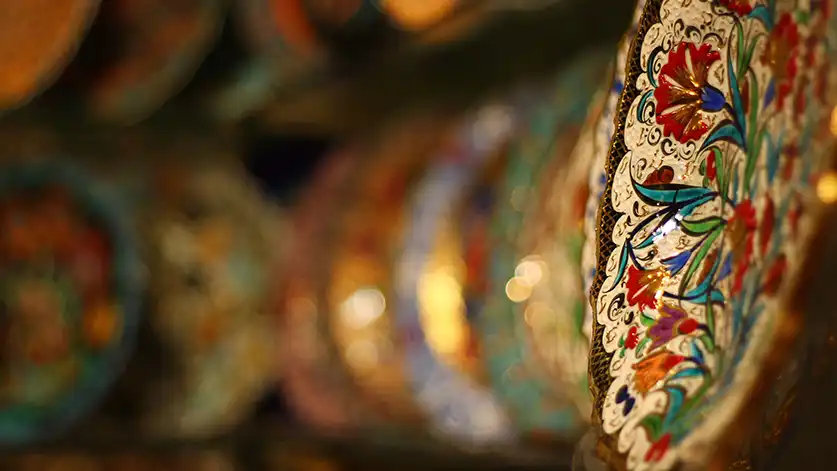
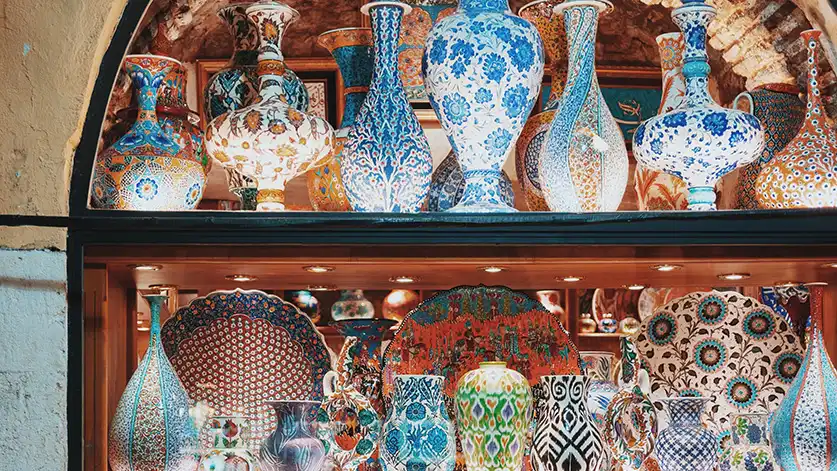
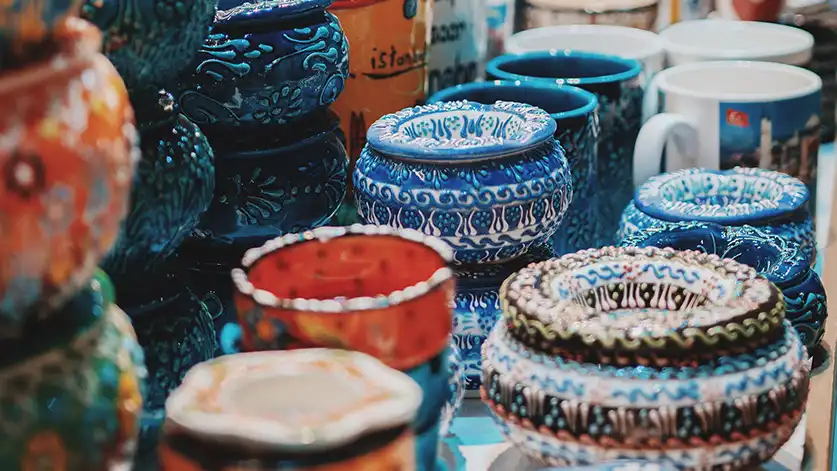
The art of Turkish ceramics dates back to the Ottoman Empire. Pieces from Iznik and Kütahya are especially renowned for their vivid colors, intricate floral motifs (like tulips and carnations), and stunning craftsmanship.
You can find everything from decorative plates and bowls to elaborate tiles used to adorn mosques and palaces. For travelers looking to take home a piece of this cultural heritage, ceramics are often considered among the best souvenirs from Istanbul thanks to their beauty and timeless appeal.
Turkish Carpets and Kilims
Arguably the most famous Turkish handicraft, these hand-woven rugs are more than just floor coverings; they are works of art. Each carpet tells a story through its intricate patterns and vibrant colors, which often represent a specific region or tribe. Kilims are flat-woven rugs that are lighter and typically feature geometric designs.
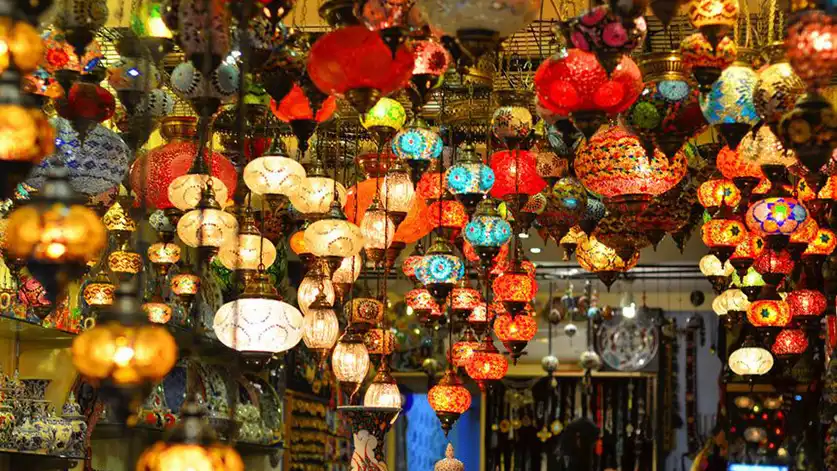
Mosaic Lamps
These mesmerizing lamps are a kaleidoscope of color. Made with small, hand-cut pieces of glass arranged in intricate mosaic patterns, they cast a warm and beautiful glow, making them a popular and unforgettable souvenir.
Turkish Copperware
The art of copperwork has a long history in Turkey, with Gaziantep being a major hub. Artisans create a wide range of items, from functional kitchenware like coffee pots (cezve) and serving trays to beautiful decorative pieces and traditional items like pepper grinders.
Weaving Art In Turkey
Weaving is one of the most significant handicrafts of Turkey, with a history spanning centuries. It’s an important part of the country’s rich cultural heritage. While it has deep traditional roots, its use in contemporary Turkish art is a more recent development.
Traditional Turkish rugs are known for their intricate geometric patterns, such as triangles and octagons, and their colors often reflect the nomadic lifestyle and local traditions. While modern designs draw inspiration from this nomadic heritage, they sometimes differ from the original patterns.
A great example of a contemporary take on a traditional design is the prayer rug, which often features a central medallion and three distinct colors, like blue and red.
The Evil Eye (Nazar Boncuğu): A Symbol of Turkish Handicrafts
The Evil Eye, or Nazar Boncuğu, is an iconic symbol of Turkey’s rich handicraft traditions. This captivating blue glass talisman is deeply rooted in ancient beliefs, serving as a powerful charm to ward off negative energy and attract good fortune.
Found everywhere from homes to jewelry, the Nazar Boncuğu is not just a beautiful handmade object; it’s a timeless cultural emblem that embodies the enduring artistry and protective spirit of Turkish heritage.
Hand-Woven Textiles (Peshtemal)
A peshtemal is a traditional Turkish bath towel that is lightweight, highly absorbent, and quick-drying. These versatile textiles are also used as scarves, beach towels, or throws, and come in a wide variety of colors and patterns.
Ebru: A Unique Turkish Art Form
Ebru, also known as paper marbling, is a stunning example of the handicrafts of Turkey. With a history that traces back to Central Asia, this art form journeyed through Iran and Anatolia before being embraced by the Ottoman Empire.
By the 17th century, it was a highly developed craft in Turkey, where it became known for its unique method of creating intricate, swirling patterns on paper.
The process involves floating pigments on a special water-based solution and then carefully transferring the design to paper, resulting in a beautiful and one-of-a-kind creation. Although the process requires great skill and patience, the captivating results showcase the deep artistic heritage of the region.
Embroidery
Embroidery is one of the most prominent handicrafts of Turkey, a tradition that flourished during the Ottoman Empire and continues today. Characterized by its bold patterns, vibrant colors, and expert craftsmanship, this art form reflects Turkey’s rich cultural heritage.
Ottoman embroidery was widely used to decorate a variety of domestic textiles, from shawls and handkerchiefs to prayer rugs and wedding dresses. A notable example is Antep işi, a distinctive style of embroidery originating from the Gaziantep province, celebrated for its intricate designs.
Turkish Jewelry
The country has a long tradition of jewelry making, with designs that draw from Ottoman and Seljuk influences. Telkari is a particularly famous form of filigree where extremely thin silver or gold wires are fused to create intricate, delicate pieces.
Wood Carving
In the realm of Turkish handicrafts, wood carving reached a high level of sophistication during the Seljuk period.Artisans of that time created exquisite works for both religious and civil buildings, demonstrating remarkable skill.
Today, this rich artistic tradition continues, and you can find a variety of finely carved wooden items like intricately decorated boxes and backgammon sets, which showcase the enduring heritage of this craft.
Calligraphy (Hat)
Calligraphy (Hat) is a prized art form among the handicrafts of Turkey. It’s the artistic and elegant writing of the Arabic script, elevated from a simple form of communication to a celebrated art.
This intricate craft is applied to a wide range of media, from traditional paper and scrolls to decorative elements on ceramics, tiles, and even architectural features. The art of calligraphy holds a significant place in Turkish and Islamic culture, serving as a profound expression of faith, history, and beauty.
Conclusion
The handicrafts of Turkey are a vibrant part of the nation’s cultural identity and a major draw for tourists. Known for their intricate detail and historical significance, these traditional arts are promoted by the tourism department and are found in shops and museums across the country.
From the delicate stitches of needlework and the flowing lines of calligraphy to the vibrant designs of Turkish mosaic lamps, which are said to have inspired the Tiffany lamp, Turkish artisans create stunning works.
Other notable crafts include the production of fine porcelain, handcrafted pottery, and world-renowned rugs. Despite the rapid pace of technological advancements, the art of traditional craftsmanship continues to thrive in Turkey, preserving a rich artistic legacy for future generations.
FAQ
The most famous is the hand-woven Turkish carpet (halı) or kilim, known for its intricate patterns and quality.
Bargaining is expected at the Grand Bazaar and Spice Bazaar, so be ready to negotiate for the best prices. For high-value items, it’s best to visit specialized, reputable shops.
A carpet is a knotted pile rug with a thick, raised surface. A kilim is a flat-woven rug with no pile, making it lighter.




Comments